
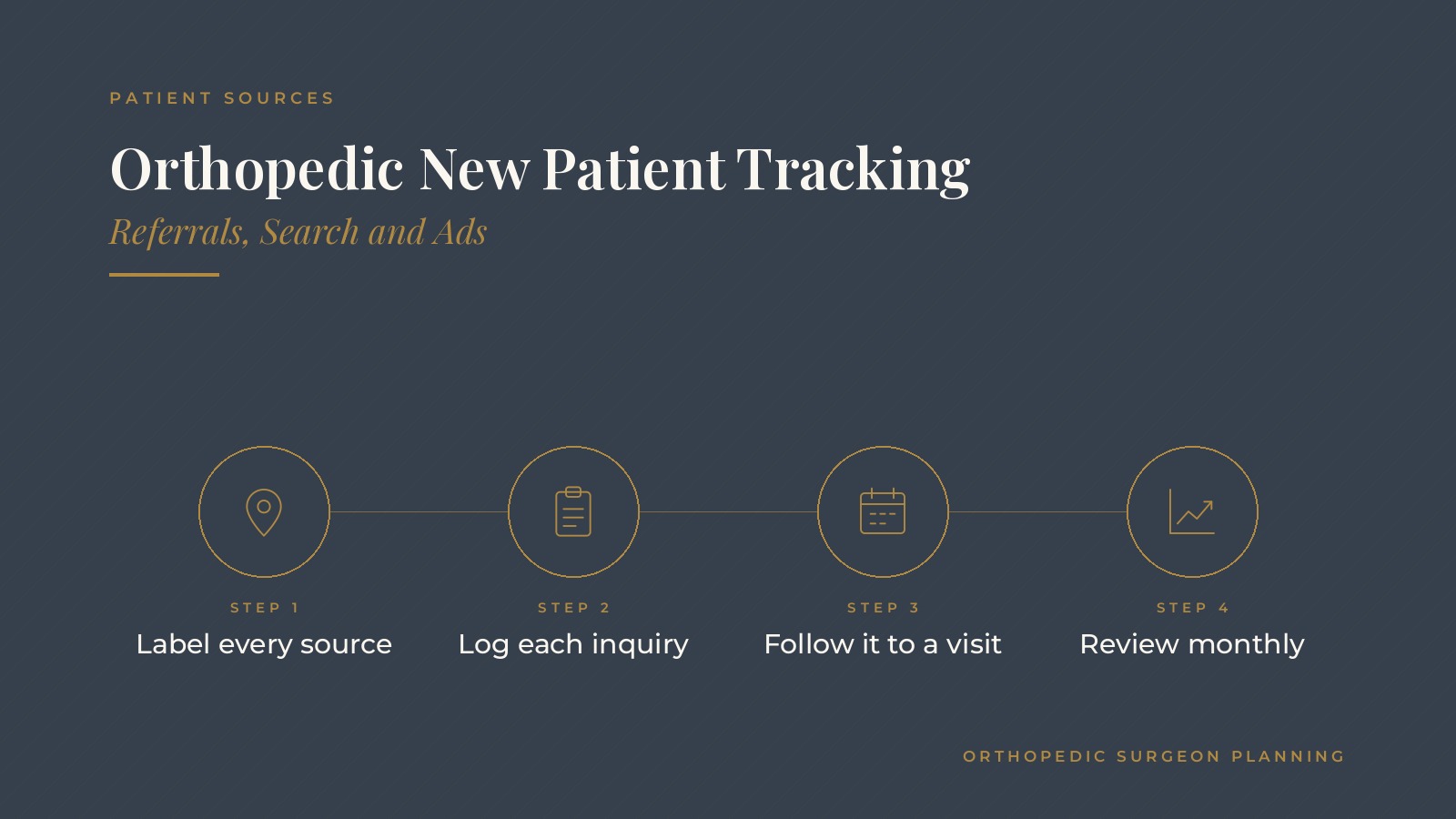
Orthopedic New Patient Tracking: Referrals, Search and Ads
Orthopedic new patient tracking is the habit of recording where each new patient inquiry comes from and following it through to a scheduled and completed visit. It covers referrals from other physicians, search results, map listings, paid ads and word of mouth. In short, orthopedic new patient tracking starts with a short list of source labels, one record for every new inquiry and a monthly review that compares sources by scheduled visits. Practices that review the same numbers each month see which sources are steady and which need attention. This resource from Orthopedic Surgeon Planning explains the sources orthopedic practices commonly track, how labels and tracking numbers are set up, how service lines are compared and the questions practices bring to a marketing professional.
Key takeaways
- Choose one short list of source labels.
- Record every new inquiry the same way.
- Follow inquiries to scheduled and completed visits.
- Compare sources by service line.
- Review the same numbers every month.
Why orthopedic new patient tracking matters
Sources are more varied than they look
Orthopedic practices receive new patients from referring physicians, physical therapy offices, urgent care, search results, map listings, ads and family recommendations. Without a record, it is hard to say which sources are steady.
Tracking supports planning
Knowing where patients come from helps a practice plan outreach, website pages and staffing at the phones. It also helps explain marketing results in plain terms to physicians and administrators.
Everyone sees the same facts
A shared source list gives front desk staff, physicians and marketing professionals a common language. The guide to orthopedic surgeon near me SEO shows how one of these sources is planned.
Sources orthopedic practices commonly track
Referring physicians and clinics
Referrals from physicians, therapy offices and other clinics are often the largest source. A simple list of referring offices, updated as new ones appear, supports outreach planning.
Search and map listings
Patients search for symptoms, procedures and surgeons by name. Service pages, surgeon pages and map listings support this source. The guide to hip replacement SEO is one example of service page planning.
Paid advertising
Paid search and social ads can be tracked with campaign tags and separate phone numbers so that calls and forms are tied to a campaign.
Urgent and walk-in services
Practices with urgent or same-day clinics often track those inquiries separately. The guide to orthopedic urgent care marketing covers how those services are presented.
Word of mouth and returning patients
Patients who return for a new concern, or who come on a family member's suggestion, form their own labels so they are not mixed with other sources.
Orthopedic Surgeon Planning can introduce you to independent digital marketing and SEO professionals who work with orthopedic practices on source labeling, reporting and local search planning. To request an introduction, contact us or call or text (972) 616-4581. You can also read about SEO for orthopedic practices.
Setting up labels, numbers and records
One list of labels
Write the labels down and share them with everyone who answers the phone or reviews web forms. Each inquiry gets exactly one primary label. Changing labels midyear makes comparisons harder, so many practices keep the list stable.
Tagged links and tracking numbers
Marketing professionals often add campaign tags to links in listings, emails and ads, and may assign separate phone numbers to different sources. These steps let reports separate sources without guesswork.
A short intake question
A question such as how the patient heard about the practice gives a second source of information to compare with the automatic reports.
One shared record
Whether it is a spreadsheet, a customer relationship tool or a field in the scheduling system, one location keeps data consistent.
Following inquiries to visits and comparing service lines
Inquiry to scheduled to completed
Three counts tell most of the story: inquiries, scheduled visits and completed visits. A gap between inquiries and scheduled visits often points to phone or scheduling friction, not marketing quality.
Service line views
Splitting results by service line, such as sports medicine, joints, spine, hand and foot, shows which parts of the practice depend on which sources. The same source may behave differently for different services.
Look at trends
Three months or the same month in prior years gives a steadier view than a single week. The guide to orthopedic condition pages explains how service and condition pages support these sources.
Common tracking mistakes to avoid
Too many labels
A long list of sources makes it hard to assign each inquiry. Many practices begin with six to eight labels and add more only when a need appears.
Changing definitions midstream
If the meaning of a label changes, past months can no longer be compared with the present. Write each definition down once and note the date of any change.
Counting activity instead of visits
Page views and clicks are helpful context, but they are not scheduled visits. Reports that end at clicks leave out the outcome that matters most to the practice.
Leaving the front desk out
The people who answer the phone know when a source label is wrong or missing. Asking them to review the monthly summary catches gaps that software cannot see. The guide to orthopedic surgeon near me SEO is another useful reference for local sources.
Putting a tracking plan together
Gather the inputs
Write down the sources in use, the draft labels, the people who handle inquiries and the accounts that hold the data. Having these in one document makes conversations with a marketing professional faster and clearer.
Assign roles
Name one person at the practice to own the monthly report, one to keep the labels consistent and one to be the contact for the marketing professional. Clear roles prevent delays.
Write the monthly calendar
A one-page schedule showing when numbers are gathered, when the review happens and when changes are made keeps everyone aligned. Share it with the whole team and update it as plans change.
Start small
Many practices begin with a handful of labels and the three core counts, then add detail in the second or third month. A simple start tends to last longer than an elaborate one.
Questions to ask a marketing professional
Planning questions
- Which sources will appear in every monthly report?
- How is each source defined and recorded?
- How are calls, forms and messages counted?
- How will reports be split by service line?
- Who has access to the reports and underlying accounts?
Keep accounts in the practice's name
Many practices ask that analytics, listing and advertising accounts be opened under the practice's own login, with the marketing professional added as a user. That keeps the history with the practice if the working relationship changes.
Frequently asked questions
What is orthopedic new patient tracking?
It is the practice of recording where each new patient inquiry comes from and following it through to a scheduled and completed visit.
Which sources do orthopedic practices track?
Common sources include referring physicians and clinics, search results, map listings, paid ads, urgent care services and word of mouth.
How does a practice know where a patient came from?
Most combine tagged links, tracking phone numbers and a short intake question, all recorded under one consistent list of source labels.
Why compare by service line?
Different services draw patients from different sources, so a view by service line shows where each part of the practice depends on referrals, search or ads.
How often should the numbers be reviewed?
Most practices review monthly and compare several months together so that one quiet or busy week does not drive decisions.
Request an introduction
Orthopedic Surgeon Planning can introduce you to independent digital marketing and SEO professionals who work with orthopedic practices on source labeling and monthly reporting. Learn more about SEO for orthopedic practices, then take the short Orthopedic Marketing & SEO survey and request an introduction. You can also call or text (972) 616-4581, or contact us. The form goes to [email protected].