
Hand Surgeon Marketing | Promoting a Hand and Upper-Extremity Subspecialty
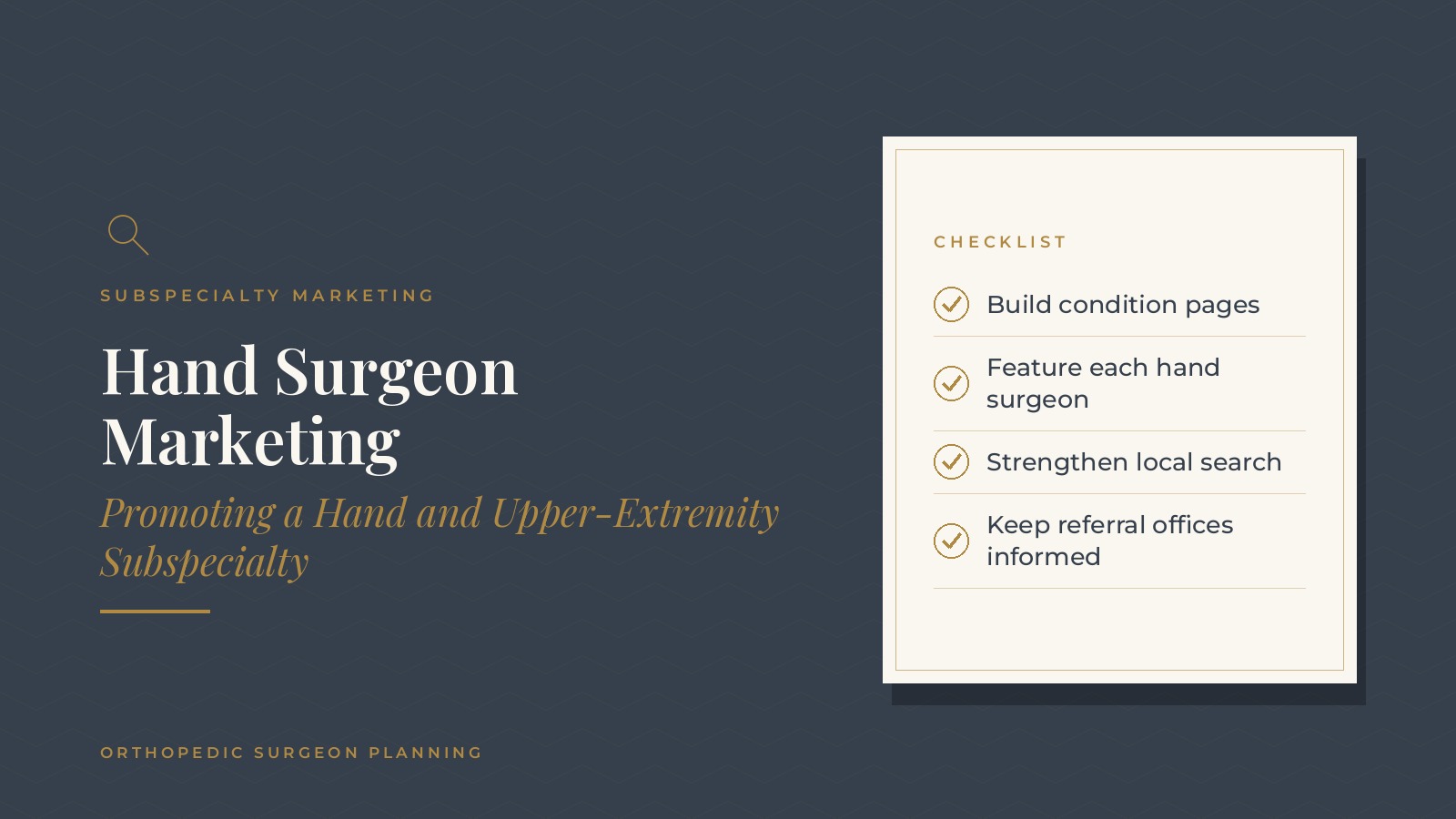
Hand surgeon marketing is the planned effort to help patients and referring providers find and understand a practice's hand and upper-extremity service. It covers condition and treatment pages, surgeon profiles, local search listings, referral outreach and simple reporting on where new hand patients come from. In short, hand surgeon marketing works best when the practice gives the subspecialty its own clear section of the website, writes plain pages for the conditions patients search for, keeps surgeon profiles and listings current and keeps referring offices informed. A monthly review of new hand patients by source shows what is working. This resource from Orthopedic Surgeon Planning explains how hand and upper-extremity services are commonly presented online, how search and referrals fit together and the questions practices bring to a marketing professional.
Key takeaways
- Give the subspecialty its own website section.
- Write plain pages for common hand conditions.
- Feature each hand surgeon with a full profile.
- Keep referring offices informed and supplied.
- Review new hand patients by source monthly.
Why hand surgeon marketing needs its own plan
Patients search by symptom
People with hand, wrist or elbow problems often search for a symptom or a condition, such as numbness in the fingers or a painful trigger finger, rather than for a subspecialty name. Pages that use those everyday words help them find the practice.
Referral patterns differ
Hand and upper-extremity patients often arrive through primary physicians, urgent care centers, occupational health programs and therapists. Each group needs to know which surgeons treat which conditions.
A general orthopedic site can hide the service
When hand services sit on one short page inside a large orthopedic website, both patients and search engines may miss them. A dedicated section gives the subspecialty room to explain itself.
Building hand and upper-extremity condition pages
One page per common condition
Many practices write a page for each condition they commonly treat, such as carpal tunnel syndrome, trigger finger, wrist fractures, thumb arthritis and elbow tendon problems. Each page explains symptoms, how the condition is evaluated and the general treatment options offered.
Plain language first
Short paragraphs, clear headings and everyday words make pages easier to read on a phone. Medical terms can follow in parentheses. Having a hand surgeon review each page before it goes live keeps the content accurate.
Link condition pages together
Each condition page can link to the surgeons who treat it, related conditions and the appointment page. The guide to orthopedic condition pages covers how these pages are commonly structured across a practice website.
Orthopedic Surgeon Planning can introduce you to independent digital marketing and SEO professionals who work with orthopedic practices on subspecialty service pages, physician profiles and local search planning. To request an introduction, contact us or call or text (972) 616-4581. You can also read about SEO for orthopedic practices.
Featuring hand surgeons online
Full surgeon profiles
Each hand surgeon's profile can list training, areas of focus, locations and the conditions treated, with links to the matching condition pages.
Consistent details everywhere
The surgeon's name, specialty and locations should match across the website, online listings and directory profiles. Small differences can confuse patients and search engines.
Short educational videos
Brief videos explaining a common condition or what to expect at a first visit can help patients feel prepared. The guide to orthopedic YouTube covers how practices plan and publish educational videos.
Local search for a hand and upper-extremity service
Listings for each location
Online business listings for each location can name hand and upper-extremity care among the services offered, with accurate hours and phone numbers.
Location and condition pages
Pages that combine a condition with a location, written carefully and only where the practice actually offers care, can help patients nearby find the right office.
Learn from similar subspecialty work
Spine and joint replacement services often use the same approach of condition pages, surgeon profiles and local listings. The guide to spine surgeon SEO explains how one subspecialty can build its own search presence inside a larger practice.
Keeping referring offices informed
A simple referral guide
A one-page guide listing the hand conditions the practice treats, the surgeons who treat them and how to send a referral helps busy offices route patients correctly.
Regular outreach
Periodic visits, short emails or lunch-and-learn sessions keep referring offices aware of the service, new surgeons and new locations. A named contact at the practice for referring offices gives them one person to call with questions about scheduling or urgent cases.
Easy ways to refer
A clear referral phone line, an online referral form and quick confirmation that a referral arrived make it easier for offices to send patients again.
Close the loop
A short note back to the referring office after the first visit, sent through the practice's usual channels, shows that the patient was seen and helps the office feel confident sending the next patient.
Measuring hand surgeon marketing
New hand patients by source
Tagging each new hand patient with a source, such as search, a referring office or an occupational health program, shows which channels bring in visits. The guide to orthopedic new patient tracking explains how source labels are set up.
Page visits and calls
Visits to hand condition pages and calls from those pages show whether patients are finding the content.
A monthly review
A short monthly report of new hand patients, top sources and page visits helps the practice decide which pages to improve and which referral relationships to strengthen. Keeping the same report format each month makes seasonal changes and the effect of new pages easier to see.
Questions to ask a marketing professional
Planning questions
- How will the hand and upper-extremity section be organized on the website?
- Which condition pages will be written first and who reviews them?
- How will surgeon details be kept consistent across listings?
- How will new hand patients be tracked by source?
- What does the monthly report include?
Keep access in the practice's name
Many practices ask that website, analytics and listing accounts be opened under the practice's own login, with the marketing professional added as a user. That keeps the history with the practice.
Frequently asked questions
What is hand surgeon marketing?
It is the planned effort to help patients and referring providers find a practice's hand and upper-extremity service, through condition pages, surgeon profiles, local search and referral outreach.
Why give hand surgery its own website section?
A dedicated section gives the subspecialty room to explain each condition and surgeon, which helps both patients and search engines find the service inside a larger orthopedic site.
Which hand condition pages do practices usually write first?
Many start with the conditions they treat most often, such as carpal tunnel syndrome, trigger finger, wrist fractures, thumb arthritis and elbow tendon problems.
How do practices keep referring offices informed?
Common methods include a one-page referral guide, periodic outreach visits or emails, a clear referral phone line and quick confirmation of each referral.
How is hand surgeon marketing measured?
Practices usually track new hand patients by source, visits and calls from hand condition pages and changes over time in a monthly report.
Request an introduction
Orthopedic Surgeon Planning can introduce you to independent digital marketing and SEO professionals who work with orthopedic practices on subspecialty pages, local search and referral outreach planning. Learn more about SEO for orthopedic practices, then take the short Orthopedic Surgeon Planning Marketing & SEO survey and request an introduction. You can also call or text (972) 616-4581, or contact us. The form goes to [email protected].



