
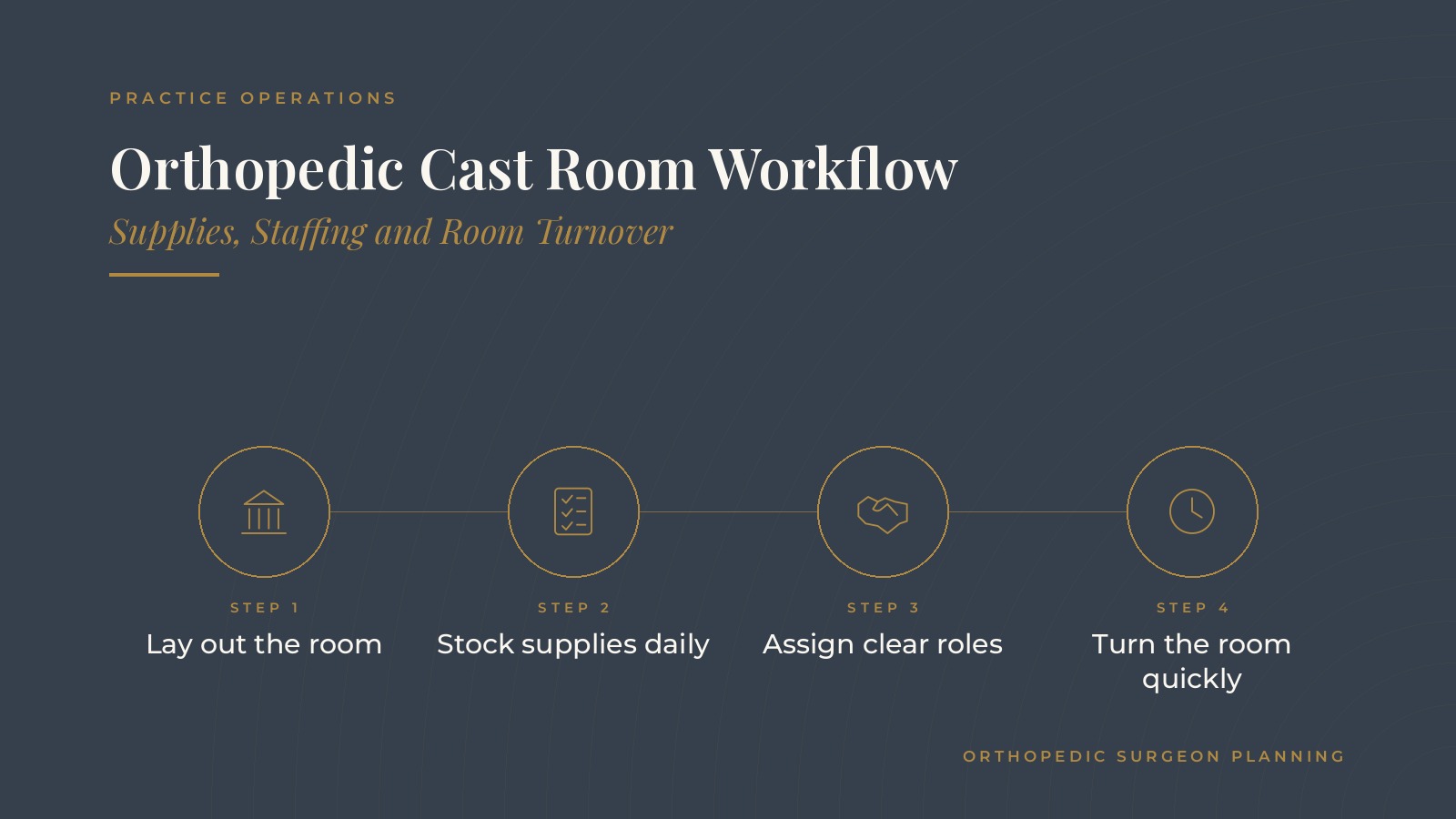
Orthopedic Cast Room Workflow | Supplies, Staffing and Room Turnover
An orthopedic cast room workflow is the routine a clinic follows to move patients through cast, splint and brace visits. It covers how the room is laid out, how supplies are stocked, who does what, how visits are scheduled and how the room is turned over between patients. In short, an orthopedic cast room workflow runs smoothly when the room has clear stations, supplies are restocked to set levels every day, each staff member has a defined role, cast visits are scheduled in predictable blocks and turnover follows the same short checklist every time. This resource from Orthopedic Surgeon Planning walks through the operational side of the cast room, from layout and supplies to staffing and turnover, and the questions practices bring to practice operations professionals.
Key takeaways
- Lay out the room in clear stations.
- Restock supplies to set levels daily.
- Give each staff member a defined role.
- Schedule cast visits in predictable blocks.
- Use one checklist for every room turnover.
What an orthopedic cast room workflow covers
A busy shared space
In many orthopedic clinics, the cast room serves several surgeons and providers during the same session. Without a shared routine, delays in the cast room ripple through the whole clinic day.
From check-in to checkout
The workflow covers how patients arrive at the room, how the visit is handled, how the room is reset and how patients move on to checkout or imaging.
Part of overall clinic flow
The cast room is one link in the chain. The guide to orthopedic clinic flow explains how rooms, imaging and staff are coordinated across a clinic session.
Room layout and stations
Clear stations
Many cast rooms are arranged in stations, such as a treatment chair or table, a supply area, a sink area and a cleanup area, so staff do not cross paths.
Supplies within reach
Frequently used items are stored close to each station, while bulk stock is kept in a separate cabinet or nearby storage room.
Room for movement
Enough space for wheelchairs, crutches and a family member keeps visits from feeling cramped.
Planning a new space
Practices that are expanding or moving can plan the cast room alongside imaging and exam rooms. The guide to orthopedic build-out planning covers how layouts are commonly planned.
Orthopedic Surgeon Planning can introduce you to independent practice operations professionals who work with orthopedic practices on clinic workflows, room setup and staffing plans. To request an introduction, contact us or call or text (972) 616-4581. You can also read about orthopedic practice operations.
Supply stocking and set levels
Set levels for each item
Each item has a set level, the amount that should be on hand at the start of every day. Staff restock to that level at the end of the day or before the first patient.
A simple stocking list
A printed or shared list of every item and its set level makes restocking quick and lets any trained team member do it.
Reorder points
When bulk stock falls to a chosen reorder point, the person responsible places an order, so the room does not run short during a busy week.
Check equipment
A quick daily check of the room's equipment, done by the same role each day, catches problems before patients are waiting.
Staff roles in the cast room
Defined responsibilities
Clear roles, such as who rooms the patient, who assists the provider, who restocks and who handles cleanup, prevent duplicated work and missed steps.
Coverage during busy sessions
On heavy fracture clinic days, many practices schedule an extra cast technician or a cross-trained medical assistant to keep the room moving.
Training and refreshers
New team members shadow experienced staff before working the room on their own, and the team reviews the routine together when a step changes.
Communication with the front desk
The cast room team tells the front desk when it is running behind, so check-in staff can keep waiting patients informed. The guide to the orthopedic front desk workflow covers how that communication is commonly organized.
Scheduling cast room visits
Predictable blocks
Grouping cast changes and removals into blocks within each session helps staff prepare and keeps the room from being overloaded at one time.
Visit types and lengths
Different visit types, such as cast removal, cast change or splint check, can be given standard lengths so the schedule reflects real room time.
Linking to imaging
When a visit includes imaging, scheduling the cast room and imaging in a logical order avoids patients waiting between rooms. The guide to orthopedic scheduling templates explains how clinics build templates that include these blocks.
Turnover steps between patients
One short checklist
A turnover checklist posted in the room lists the same steps every time, such as clearing used materials, wiping surfaces, resetting the chair or table and restocking the station.
Assign the turnover
One role owns turnover for each patient, so staff do not assume someone else will do it.
Signal when ready
A simple signal, such as a flag or a status in the scheduling system, shows that the room is ready for the next patient.
End-of-day reset
At the end of each session, a fuller reset, including a deeper cleanup, a full restock to set levels and a check that equipment is put away, leaves the room ready for the next morning. Assigning the end-of-day reset to a named role on the schedule keeps it from being skipped on busy days.
Measures and questions to ask a practice operations professional
Simple measures
Many clinics track the number of cast room visits per session, average wait time for the room and how often supplies run short.
Planning questions
- Is the cast room laid out in clear stations?
- Does every supply item have a set level and a reorder point?
- Who owns restocking, equipment checks and turnover each day?
- How are cast room visits grouped into blocks on the schedule?
- Which simple measures will be reviewed each month?
Keep the routine in writing
Many practices keep the stocking list, turnover checklist and role outlines in a shared folder, so the routine can be taught to new staff.
Frequently asked questions
What is an orthopedic cast room workflow?
It is the routine a clinic follows for cast, splint and brace visits, covering room layout, supply stocking, staff roles, scheduling and turnover.
How are cast room supplies kept stocked?
Many clinics give each item a set level that is restocked daily and a reorder point for bulk stock, using a simple stocking list.
Who should own cast room turnover?
Most clinics assign one role to handle turnover for each patient and use the same posted checklist every time.
How should cast room visits be scheduled?
Many clinics group cast changes and removals into blocks within each session and give each visit type a standard length.
What measures help track the cast room?
Common measures include visits per session, average wait time for the room and how often supplies run short.
Request an introduction
Orthopedic Surgeon Planning can introduce you to independent practice operations professionals who work with orthopedic practices on clinic workflows, scheduling and practice operations. Learn more about orthopedic practice operations, then take the short Orthopedic Surgeon Planning Business survey and request an introduction. You can also call or text (972) 616-4581, or contact us. The form goes to [email protected].



