
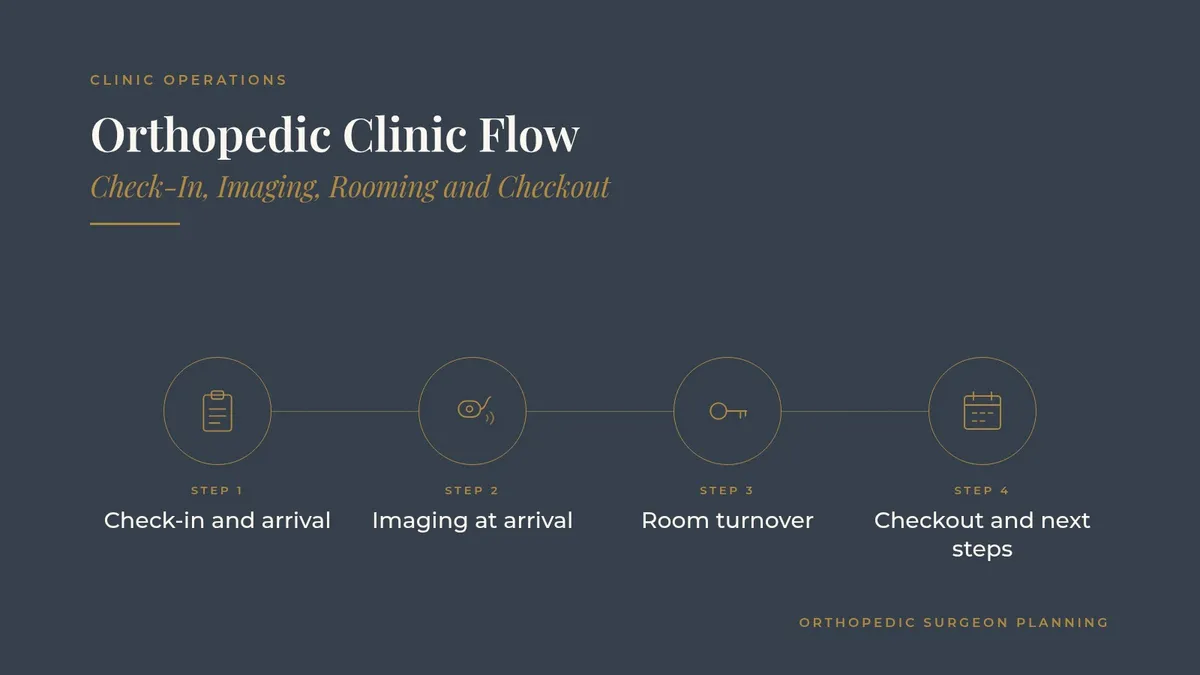
Orthopedic Clinic Flow: Check-In, Imaging, Rooming and Checkout
Orthopedic clinic flow describes how patients move through an orthopedic clinic day, from arrival and check-in through imaging, rooming, the provider visit and checkout. Orthopedic clinics often see a wide mix of visit types in a single session: new injuries, post-op checks, injections, cast changes and imaging reviews. Each of those visits follows a slightly different path through the building, which is why clinic flow is a topic of its own in orthopedic practice operations.
In short: orthopedic clinic flow is the sequence of check-in, imaging, rooming, the provider visit and checkout, and how those steps connect for each visit type. It depends on templates, room turnover, clear roles and a defined handoff at the end of each visit. This overview walks through each stage, the people involved and the operational signals many orthopedic practices watch.
Key takeaways
Clinic flow covers arrival through checkout.
Visit types follow different paths.
Imaging timing shapes the whole session.
Rooms and casting need clear owners.
Checkout connects the visit to next steps.
Why orthopedic clinic flow is its own discipline
A high-volume, mixed schedule
Many orthopedic clinics run full sessions with several providers sharing rooms, staff and imaging. A single morning can include fracture follow-ups, sports injuries, arthritis visits, joint replacement post-op checks and injection appointments. Because each visit type needs different steps and time, flow in an orthopedic clinic looks less like a straight line and more like several lanes side by side.
Imaging sits in the middle of the visit
In many specialties, the patient goes from the waiting room straight to an exam room. In orthopedics, x-rays are often taken before the surgeon sees the patient, so imaging becomes a step in the middle of the visit. When the x-ray room backs up, the delay moves through rooming, the provider schedule and checkout.
Mobility changes the pace
Orthopedic patients may arrive on crutches, in a boot, in a sling or in a wheelchair. Moving between check-in, imaging and an exam room can take longer, and some patients need help changing or getting onto an exam table.
Mapping visit types before the clinic day
Common orthopedic visit types
Most orthopedic clinic templates include some version of these visit types:
New patient visits, often with new imaging
Post-op checks, sometimes with suture or staple removal
Fracture follow-ups with cast or splint changes
Injection visits
Established patient follow-ups and imaging reviews
Templates that reflect the path
Scheduling templates are one of the main tools that shape clinic flow. Templates commonly set the length of each visit type, where it falls in the session and how many of each type a provider sees in a block. When templates reflect the real path a visit takes, including imaging and casting time, the clinic day tends to match the schedule more closely.
The pre-clinic huddle
Many orthopedic teams hold a short huddle before each session. The huddle often covers which patients need imaging, which visits involve cast removal or injections, which patients may need mobility help and where outside imaging or records are still missing.
Check-in and arrival
Front desk handoffs
Check-in is where the clinic first learns whether a patient is ready to be seen. Front desk staff confirm identity, update contact details, collect any remaining forms and signal to the clinical team that the patient has arrived. A clear arrival signal, whether in the EHR tracking board or a status screen, lets imaging and medical assistants see who is next without walking to the front.
Forms and records before arrival
Much of what slows check-in happens before the patient arrives: unfinished forms, missing referral notes or outside imaging that never came in. The front-end process is covered in our guide to orthopedic patient intake, imaging and forms, which pairs naturally with clinic flow.
Wayfinding and waiting areas
Clear signs, seating that is easy to get in and out of and room for walkers and wheelchairs all affect how smoothly patients move from the lobby into the clinic.
Imaging and rooming in orthopedic clinic flow
Imaging at arrival
Many orthopedic clinics use surgeon-approved imaging protocols by visit type, so radiology technologists know which views are typically needed before the provider visit. This lets imaging begin soon after check-in.
Room turnover
Exam rooms are one of the tightest resources in an orthopedic clinic. Room turnover covers cleaning, restocking and resetting a room between patients. Some clinics assign rooms to providers, while others use a shared pool. Either way, clinics usually name who handles turnover so rooms are ready for the next patient.
Casting, splinting and bracing areas
Cast rooms and bracing areas are often shared across providers, so they can become a bottleneck during busy sessions. Clinics commonly look at how cast changes are scheduled within the session, who applies and removes casts and splints, and where supplies are stored so the area is ready for the next patient.
Injection visits
Injection visits are usually short, but they involve preparation, supplies and sometimes imaging guidance. Some clinics group injection visits together or run them in a dedicated room so they don't compete with longer new patient visits.
Orthopedic Surgeon Planning can introduce you to independent practice operations, IT and phone system professionals who work with orthopedic practices. To request an introduction, contact us or call or text (972) 616-4581.
The provider visit and team roles
Medical assistants and scribes
Medical assistants often room patients, review the reason for the visit, update medications and prepare the room for any procedure. In some clinics, scribes or documentation tools support the provider during the visit. Clear role descriptions help each person know which steps they own as a patient moves through the clinic.
Advanced practice providers on shared schedules
Many orthopedic groups have physician assistants and nurse practitioners who see post-op checks, follow-ups and some new patient visits. How their schedules interlock with the surgeons' schedules, and how rooms and staff are shared, is a large part of clinic flow planning.
Tools that show where everyone is
EHR patient tracking boards, room status lights, secure staff messaging and phone systems with clinic queues all give the team a shared picture of the session. These tools work best when staff use the same statuses the same way.
Checkout and next steps
Follow-up scheduling
Checkout is where the plan from the visit becomes appointments on the calendar. That may include a follow-up visit, a repeat x-ray, an injection or a cast change. Many clinics schedule the next visit before the patient leaves, which keeps the patient from having to call back later.
Therapy and imaging orders
Orthopedic visits often end with orders for physical therapy, advanced imaging or braces. Clear written instructions at checkout explain what happens next, who will call and how to reach the clinic with questions.
Handoff to the surgery coordinator
When a patient decides on surgery, checkout becomes a handoff. The surgery coordinator takes over scheduling, pre-op steps and patient communication. That workflow is covered in our guide to orthopedic surgery scheduling from decision to OR date.
Measuring clinic flow
Operational signals
Many orthopedic practices track a short list of clinic flow measures by provider and location:
Arrival to imaging time
Arrival to rooming time
Rooming to provider time
Total time in clinic by visit type
First appointment start time for each session
Open slots and same-day changes
Reviewing with the people who do the work
Numbers become useful when the front desk, imaging, medical assistants and providers look at them together. A regular review can point to the step where delays start, which is often different from the step where patients notice them.
Patient feedback
Patient comments often mention waiting, communication and how the visit felt. Read together with review themes, as described in our guide to orthopedic reviews and timing requests around recovery, these comments add the patient's view to the operational numbers.
Frequently asked questions
What is orthopedic clinic flow?
Orthopedic clinic flow is the path patients take through a clinic visit, from check-in and imaging to rooming, the provider visit and checkout, and how those steps connect for each visit type.
Why does imaging matter so much in orthopedic clinic flow?
In many orthopedic visits, x-rays are taken before the provider sees the patient, so imaging sits in the middle of the visit and delays there can affect rooming, the provider schedule and checkout.
Who usually manages clinic flow in an orthopedic practice?
Clinic flow is often overseen by a clinic manager or practice administrator, working with front desk leads, imaging staff, medical assistants and the providers.
What tools support orthopedic clinic flow?
Common tools include EHR patient tracking boards, room status systems, secure staff messaging, scheduling templates and phone systems with clinic queues.
What does checkout include in an orthopedic clinic?
Checkout usually includes scheduling follow-up visits, sharing therapy or imaging orders, written next steps and, when surgery is planned, a handoff to the surgery coordinator.
Request an introduction
Orthopedic Surgeon Planning can introduce you to independent practice operations, IT and phone system professionals who work with orthopedic practices. Take the short Ortho Business survey and request an introduction. You can also call or text (972) 616-4581, or contact us about practice operations introductions for your orthopedic group. The form goes to [email protected].