
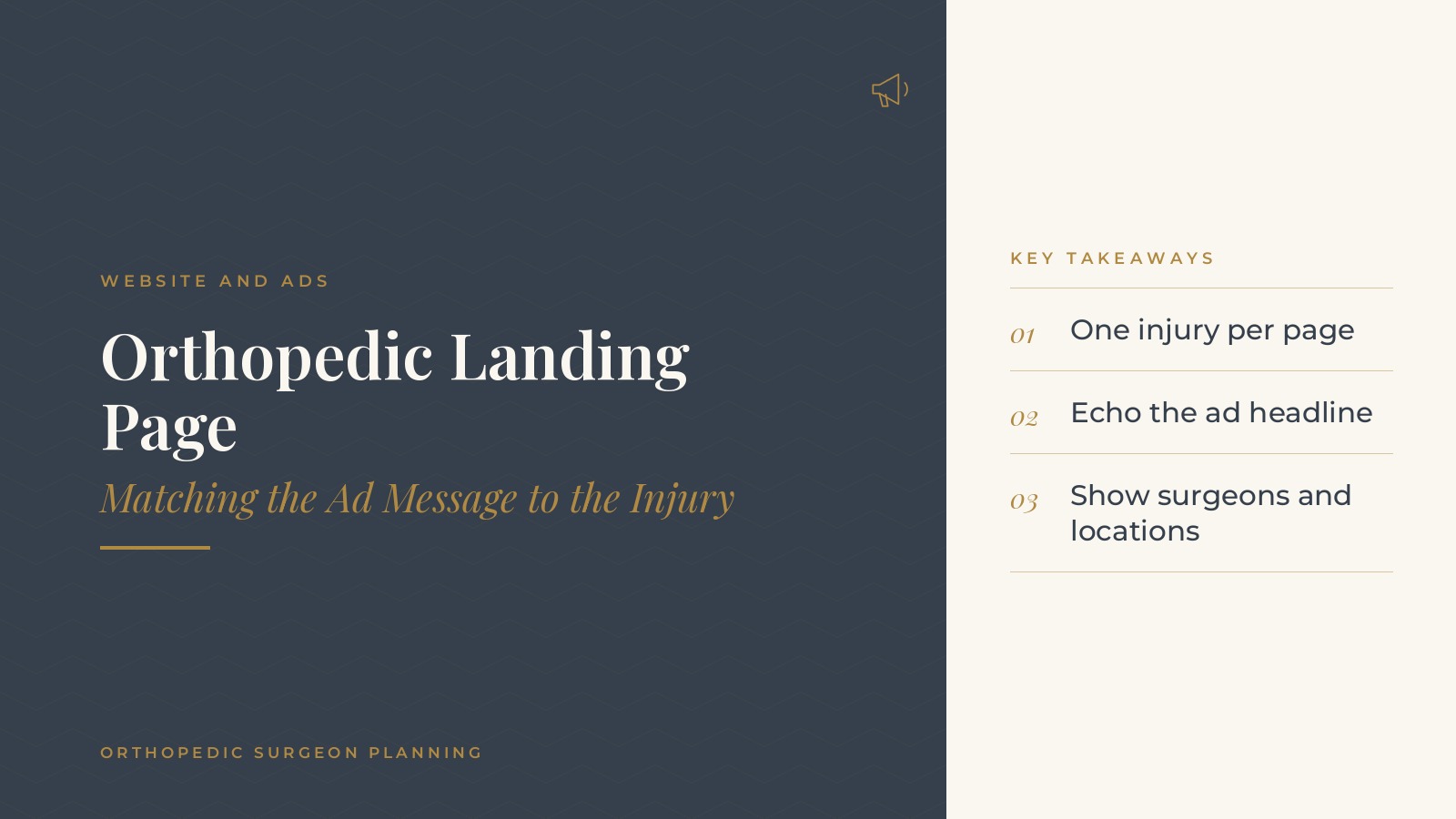
Orthopedic Landing Page | Matching the Ad Message to the Injury
An orthopedic landing page is a focused web page built for one injury, body area or service and one campaign, such as knee pain, shoulder injuries or a sports medicine clinic. It is where people land after clicking an ad, and it has one job: to show that the practice treats their concern and make the next step easy.
In short, an orthopedic landing page tends to work best when it covers one body area or injury, echoes the wording of the ad in its headline, shows the surgeons and locations that treat that concern, explains what the first visit looks like, offers one clear way to call or request an appointment and is reviewed against call and request data each month.
This resource from Orthopedic Surgeon Planning explains how orthopedic landing pages differ from service pages, how practices match pages to ads, what the pages commonly include and the questions practices often bring to a marketing professional.
Key takeaways
- Build one landing page per injury or body area.
- Echo the ad's wording in the headline.
- Show the surgeons and locations for that concern.
- Offer one clear way to call or request a visit.
- Review calls and requests by page monthly.
What an orthopedic landing page does
A page built for one campaign
A landing page receives visitors from a specific ad or campaign. It focuses on one concern and one action, with fewer menus and links than a standard page.
How it differs from a condition page
Condition pages explain a diagnosis for anyone who finds the site through search. Landing pages speak to the people a campaign reaches and mirror the campaign's wording. The orthopedic condition pages guide covers the search side.
Why the homepage is a weak landing spot
An ad about knee pain that leads to a general homepage asks the visitor to search again. Many people leave instead.
Pages that last beyond one campaign
Many practices keep landing pages live between campaigns and update the headline when a new campaign starts, so the page builds history instead of starting over each season.
Matching the message to the injury
The headline echoes the ad
If the ad mentions knee pain when climbing stairs, the landing page headline uses similar words. That match tells the visitor they are in the right place.
One body area per page
A page that covers knees, shoulders and spines at once can feel unfocused. Many practices build separate pages for each body area or injury group.
Campaign structure behind the pages
Ad groups organized by body area make it simple to point each group to its matching page. The knee replacement marketing guide shows how one service line can be planned from search to visit.
Orthopedic Surgeon Planning can introduce you to independent digital marketing professionals who work with orthopedic practices on ad landing pages, campaign structure and website conversion planning. To request an introduction, contact us or call or text (972) 616-4581. You can also read about digital marketing for orthopedic practices.
What an orthopedic landing page commonly includes
Core page elements
- A headline that matches the ad
- A short, plain summary of the concern and how the practice evaluates it
- What happens at the first visit, including imaging if needed
- The surgeons and clinicians who see that concern
- Locations, hours and parking notes
- One clear way to call or request an appointment
Short FAQs
Three to five common questions, such as whether a referral is needed or how long a first visit takes, help visitors decide without leaving the page.
Reviews and trust signals
Many practices show their overall star rating and links to review sites rather than quoting individual patients.
Surgeons, locations and visit details
Matching surgeons to the concern
A landing page for shoulder injuries usually features the surgeons who focus on shoulders, with links to their bio pages.
Locations that offer the service
If only some offices see a certain concern, the page lists those offices so callers are not booked at the wrong location.
Setting expectations
A short description of the first visit, such as check-in, imaging and time with the surgeon, helps visitors feel prepared. The orthopedic online scheduling guide covers how practices route requests to the right surgeon.
Call paths, request forms and scheduling
One clear action
Most orthopedic landing pages offer a call button and a short request form. Too many options can slow visitors down.
Short request forms
Name, phone, preferred location and the body area of concern are often enough. Many practices keep detailed health questions off ad landing pages and cover them on the phone.
Front desk readiness
Schedulers who know which campaigns are running can answer callers with confidence and book them with the right surgeon.
Fast pages on phones
Most ad clicks come from phones. Pages that load quickly and keep the call button visible tend to hold visitors better than heavy pages.
Measuring orthopedic landing page results
Measures many practices watch
- Calls and requests from each landing page
- Visitors by campaign and device
- Booked new patient visits by campaign
- Pages where visitors leave quickly
Tracking new patient sources
A simple question at scheduling about how the patient found the practice supports the data from the page. The orthopedic new patient sources guide covers how practices track referrals, search and ads together.
One change at a time
Some practices test one headline or button change at a time so the effect is clear, then keep what works. A marketing professional can explain how orthopedic SEO and paid campaigns share these lessons.
Questions practices bring to a marketing professional
Common planning questions
- Which injuries or body areas need their own landing page?
- How should ad groups be organized to match the pages?
- What should the request form ask, and what should wait for the call?
- What reports will the practice see each month?
Keeping accounts in the practice's name
Many practices keep the website, ad and analytics accounts in the practice's own name, with outside professionals added as users, so campaign history stays with the practice.
Frequently asked questions
What is an orthopedic landing page?
It is a focused web page built for one injury, body area or service and one campaign, so people who click an ad can see that the practice treats their concern and take one clear next step.
How is a landing page different from a condition page?
A condition page explains a diagnosis for anyone who finds the site, while a landing page speaks to the people one campaign reaches and mirrors that campaign's wording.
Should one landing page cover several body areas?
Many practices build separate pages for each body area or injury group so the message stays focused and matches each ad.
What should an orthopedic landing page form ask?
Many practices ask only for name, phone, preferred location and the body area of concern, and leave health details for the phone conversation.
How do practices measure landing page results?
Many review calls, requests and booked new patient visits from each page by campaign every month and test one change at a time.
Request an introduction
Orthopedic Surgeon Planning can introduce you to independent digital marketing professionals who work with orthopedic practices on orthopedic landing pages, ad campaigns and website planning. Learn more about digital marketing for orthopedic practices, then take the short Orthopedic Surgeon Planning Marketing & SEO survey and request an introduction. You can also call or text (972) 616-4581, or contact us. The form goes to [email protected].



