
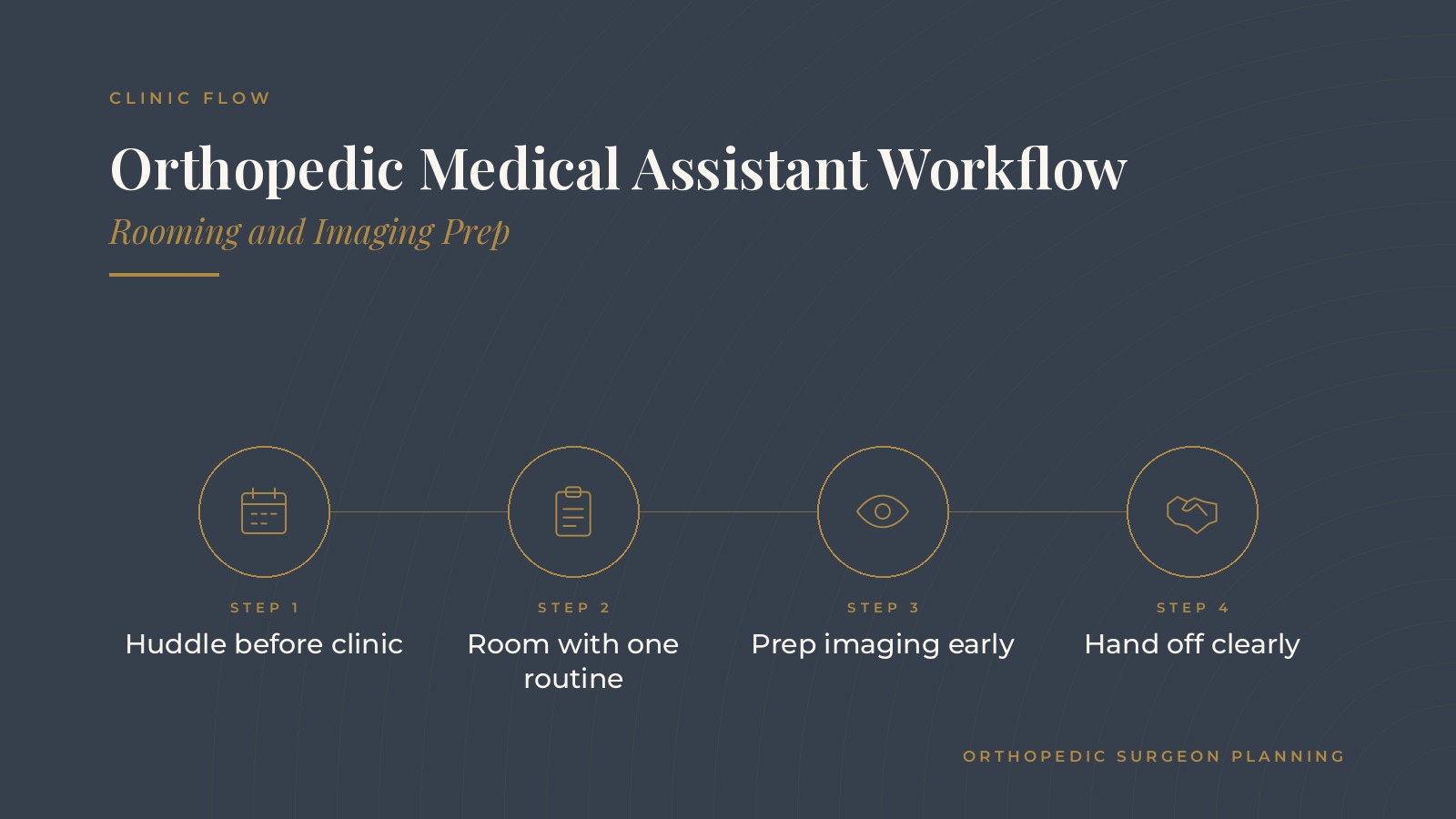
Orthopedic Medical Assistant Workflow | Rooming and Imaging Prep
An orthopedic medical assistant workflow is the set routine medical assistants follow during a clinic session, from the morning huddle through rooming, imaging prep, physician handoffs and room turnover. A clear workflow keeps patients moving between check-in, imaging and the exam room and helps surgeons stay on schedule.
In short, an orthopedic medical assistant workflow tends to work best when the team huddles before clinic, every assistant rooms patients the same way, imaging needs are confirmed early, handoffs to the physician follow a standard format, rooms are reset quickly and coverage is planned around each surgeon's schedule.
This resource from Orthopedic Surgeon Planning explains why a written workflow matters, how the huddle and rooming steps are usually organized, how imaging prep and handoffs work, how coverage is planned and the questions practices often bring to a practice operations professional.
Key takeaways
- Huddle before every clinic session.
- Use one rooming routine for all assistants.
- Confirm imaging needs early.
- Hand off to the physician in a standard format.
- Plan coverage around each surgeon's schedule.
Why an orthopedic medical assistant workflow matters
High volume clinics
Orthopedic clinics often see many patients per session, with new injuries, follow-ups and post-surgery visits mixed together. Small delays at each step can push the whole schedule late.
Imaging adds a step
Many visits need new or repeat imaging before the surgeon enters the room, which adds a handoff that can easily stall.
Consistency for surgeons
When every assistant follows the same routine, surgeons can move between rooms knowing what will be ready. The orthopedic clinic flow guide covers how the full visit fits together.
The morning huddle
Reviewing the schedule
A short huddle before clinic reviews the day's patients, visit types, expected imaging, special equipment and any late add-ons.
Assigning roles
Assistants know which surgeon, rooms and tasks they cover, and who handles imaging coordination or cast room support.
Flagging needs early
The huddle is a good moment to note patients who may need extra time, an interpreter or help with mobility, so rooms and staff are ready.
Mid-session check
Some teams hold a quick check halfway through a long session to rebalance rooms and catch up on any delays.
Orthopedic Surgeon Planning can introduce you to independent practice operations professionals who work with orthopedic practices on clinic workflows, staffing plans and team routines. To request an introduction, contact us or call or text (972) 616-4581. You can also read about orthopedic practice operations.
Rooming routines
One standard sequence
Many practices use a written rooming sequence covering greeting, identity check, vitals as directed, reason for visit, medication and history updates in the chart and positioning for the exam.
Room setup by visit type
Rooms for a knee follow-up, a shoulder injury or a post-surgery visit may need different supplies or equipment, so a short list by visit type helps assistants set up quickly.
Charting as they go
Entering information in the chart during rooming, using templates set up for orthopedic visits, saves time for both assistant and surgeon. The orthopedic patient intake guide covers what happens before rooming.
Using the same words
A short shared list of terms for visit types, room status and imaging needs helps assistants, imaging staff and surgeons understand each other quickly during a busy session.
Imaging prep
Confirming orders early
Assistants often check during the huddle or at check-in whether each patient needs imaging, so orders are ready before the patient reaches the imaging area.
Coordinating with the imaging team
A simple signal, such as a status board or messaging tool, tells the imaging team who is next and tells assistants when images are ready.
Prior images
When a patient brings outside images, staff load or request them before the visit so the surgeon can review them in the room.
Routine imaging by visit type
Some practices write down which visit types usually need imaging, as set by the surgeons, so assistants can prepare without asking each time. The surgeon still makes the final decision for each patient.
Handoffs to the physician
A standard summary
Many practices use a short, standard format for handing off to the surgeon, covering the reason for visit, any changes since the last visit and whether imaging is complete.
Visual room signals
Door flags, room lights or a status screen show which rooms are ready for the surgeon, which are waiting on imaging and which need turnover.
After the exam
Assistants often handle next steps such as scheduling follow-ups, preparing orders and providing materials the surgeon selects, then reset the room. The orthopedic cast room workflow guide covers a related handoff.
Closing the visit
Before the patient leaves, assistants often confirm that the next appointment, any imaging orders and any written instructions from the surgeon are complete. A short checkout routine keeps these details from slipping when the clinic is busy.
Planning coverage
Matching assistants to surgeons
Practices often plan assistant coverage based on each surgeon's visit volume, visit types and clinic pace rather than a fixed number for every session.
Cross training
Assistants trained in rooming, imaging coordination and cast room support can shift where help is needed during busy periods.
Covering absences
A short plan for who covers when an assistant is out helps keep clinic sessions on time.
New assistant training
A written workflow makes it easier to train new assistants, since they can follow the same steps as the rest of the team. The orthopedic scheduling templates guide shows how schedules and workflows often line up.
Questions practices bring to a practice operations professional
Common planning questions
- Where do clinic sessions most often fall behind?
- Do all assistants follow the same rooming sequence?
- How do assistants and the imaging team signal readiness?
- How is assistant coverage planned for each surgeon?
Measuring flow
Many practices review check-in to rooming times, rooming to physician times and total visit length each month to spot bottlenecks.
Keeping records in the practice's name
Many practices keep written workflows, templates and scheduling tools in practice accounts, with outside professionals added as users.
Frequently asked questions
What is an orthopedic medical assistant workflow?
It is the set routine medical assistants follow during clinic, covering the huddle, rooming, imaging prep, physician handoffs and room turnover.
Why do orthopedic clinics hold a morning huddle?
A short huddle reviews the schedule, visit types, imaging needs and roles so assistants and surgeons start the session prepared.
How do assistants handle imaging prep?
Many confirm imaging orders early, coordinate with the imaging team through a status board or messaging tool and load outside images before the visit.
How is medical assistant coverage planned?
Practices often plan coverage around each surgeon's visit volume, visit types and pace, with cross trained assistants to fill gaps.
How can a practice measure clinic flow?
Many review check-in to rooming time, rooming to physician time and total visit length each month to find bottlenecks.
Request an introduction
Orthopedic Surgeon Planning can introduce you to independent practice operations professionals who work with orthopedic practices on medical assistant workflows, rooming routines and clinic coverage. Learn more about orthopedic practice operations, then take the short Orthopedic Surgeon Planning Business survey and request an introduction. You can also call or text (972) 616-4581, or contact us. The form goes to [email protected].